Blog
How Face Reading surfaces visual age & your score
Updated · May 2026
Face Reading turns one front-facing portrait into a structured, shareable report. You upload a sharp, evenly lit selfie; our pipeline maps major facial regions, blends qualitative notes with light numeric scores, and returns an infographic-style card you can keep in your profile. The headline area usually surfaces an overall composite score (often shown like a 0–100 style readout) and may include Assessed age—a clearly labeled visual estimate from your photo, not calendar age or ID verification.
What to upload
Ideal photo setup
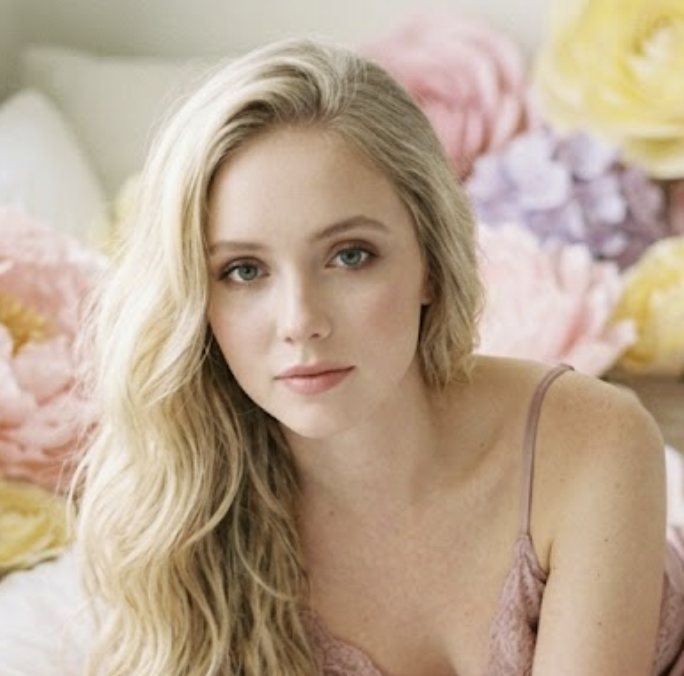
Use a clear head-and-shoulders selfie at least 640×640 pixels. Face the camera with a relaxed, neutral expression, keep eyes open and visible, and avoid heavy filters or extreme angles so landmarks read cleanly.
Example portrait
What you get
Report sections you'll see
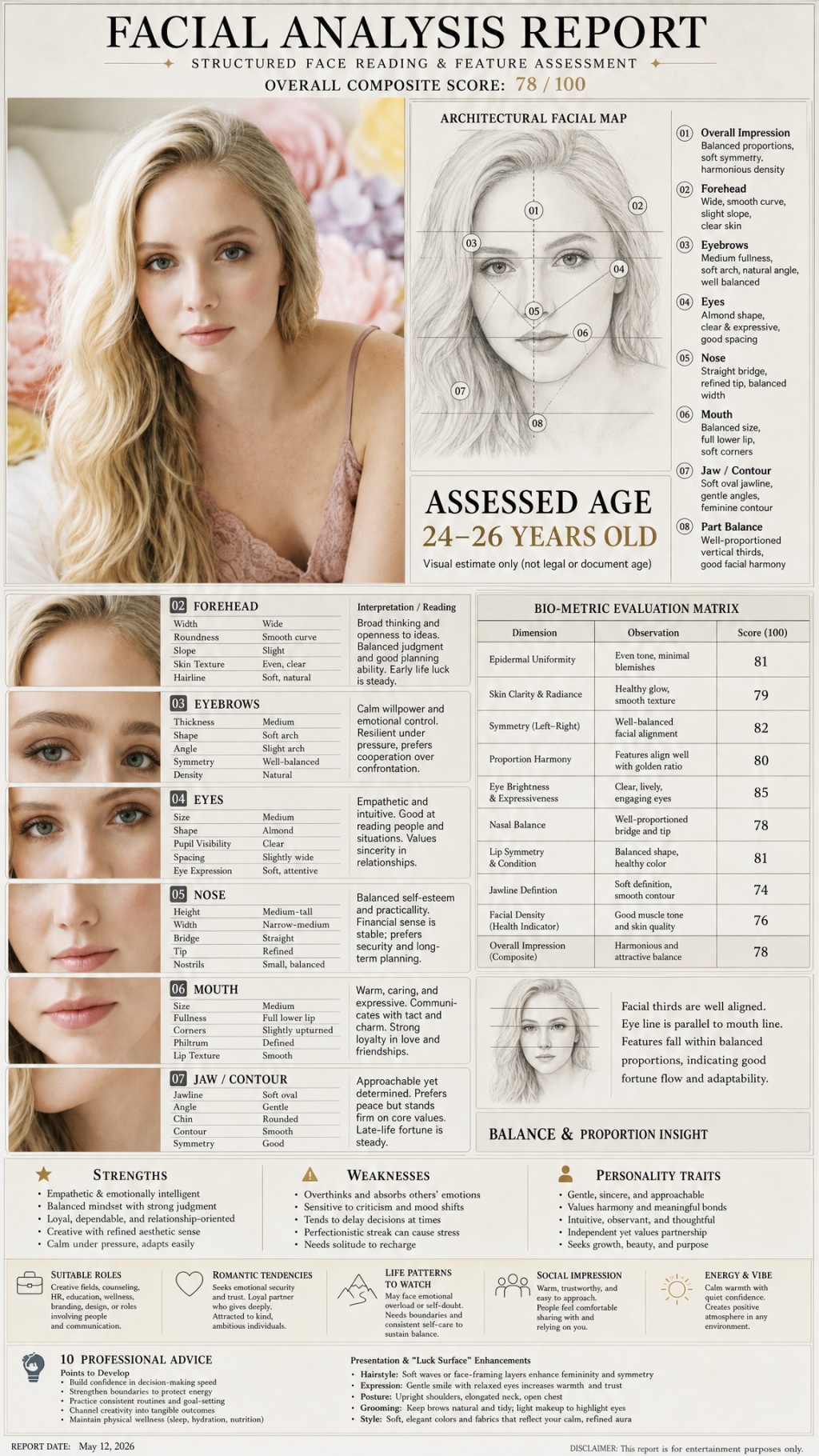
Near the top, expect an overall composite score that condenses the poster’s main numerical readout (commonly paired with sub-scores in the bio-metric grid). When present, Assessed age appears as a gentle age band derived from how you read on camera—again, a visual impression for storytelling, not a forensic or medical measurement. Below that, the layout blends an editorial mix: a face map with numbered callouts, row-by-row notes for forehead, brows, eyes, nose, mouth, and jaw, optional symmetry or proportion hints, and concise strengths, growth edges, and styling suggestions. The tall infographic poster is rendered with OpenAI’s gpt-image-2 image model so typography, diagrams, and portrait placement stay polished and share-ready. Each run is generated for entertainment—it is not medical, psychological, or professional advice.
Sample layout
Quick takeaways
- Top band: Assessed age when shown (visual estimate, not legal ID age) alongside the overall composite score, your portrait paired with a line-art "architectural face map" and numbered callouts from overall impression through jaw and vertical-thirds balance.
- Feature grid: forehead, brows, eyes, nose, mouth, and jaw/contour—each with a short physical read plus a face-reading interpretation line you can scan row by row.
- Bio-metric matrix: symmetry, proportion harmony, eye brightness, skin clarity or radiance, and lines that tie back to the overall composite score—numeric cues alongside the prose.
- Proportion insight: when shown, horizontal thirds and harmony notes explain why the layout reads balanced or adaptable.
- Personality capsule: strengths, growth edges, and trait keywords distilled from the visual assessment.
- Life-theme hints: suggested roles, romantic tendencies, social first impression, energy and vibe—similar to the icon strip on the sample poster.
- Coaching notes: decision speed, boundaries, channeling creativity—compact "points to develop" when the model includes them.
- Luck-surface styling: hair framing, relaxed eyes and smile, color and fabric mood—small presentation tweaks tied to the portrait.
- Output: one tall, editorial infographic card—rendered with gpt-image-2—you can save, screenshot, or keep in your profile for quick sharing.
Face Reading on WhoAmIVibes is for entertainment only. It does not diagnose conditions or predict real-world outcomes; treat outputs as creative prompts.